Timeless Cozy Soft Lights and Permanent LED Lighting Setup for Classic Sophistication
There is a particular kind of outside lighting that never ever really feels dated. It does not scream from the roofline or push shade for the sake of novelty. It simply resolves onto a home with quiet self-confidence, giving the design form after dark and making the entire property feel taken care of. That look typically comes down to one selection more than any various other: timeless warm soft lights.
Homeowners often begin the conversation by asking about convenience or resilience, especially when they are taking into consideration Permanent LED Illumination Setup. Those are reasonable worries. Nobody wishes to drag ladders out every period, change half a hair in freezing weather, or discover that the lights that looked attractive online feel rough and industrial on their own house. Yet the genuine choice is visual. The objective is not just to make illumination easy, it is to make it belong.
Done well, long-term lights vanishes in daylight and adds deepness in the evening. Done badly, it can flatten stunning trim, reveal every roofline joint, and make a meticulously created home resemble a retail shop. The difference usually has less to do with the technology itself and more to do with shade temperature level, component positioning, wire management, lowering control, and restraint.
Why warm light still wins
Warm light has staying power because it https://jsbin.com/?html,output complements the materials most homes are built from. Block reviews richer under warmer tones. All-natural timber, stone, painted trim, copper rain gutters, and even dark exterior siding all have a tendency to look more improved when lit up with a soft amber-white instead of a stark blue-white.
In functional terms, a lot of property owners who want a timeless appearance gravitate towards shade temperature levels in the community of 2200K to 3000K. There is no magic number that fits every house, however that variety usually stays clear of the sterilized actors that can make a home feel like a car park cover. If the property has standard style, older masonry, or warm-toned exterior surfaces, moving toward the reduced end of that variety typically creates a gentler, more lovely effect.
I have seen this play out consistently on website sees. A property owner will state they want something "brilliant sufficient to be seen," which is reasonable, especially if they are changing temporary strings that typically get shed versus dark eaves. Then a test section increases in an amazing white tone, and the reaction is immediate. The roofline pops, yes, however your home itself feels cooler. Swap that very same area to a cozy soft setup and instantly the columns, soffits, and gables reclaim their character.
Brightness matters, however warmth forms assumption. People often tend to remain around lighting that really feels comfortable. They admire lighting that really feels intentional.
Permanent does not have to indicate flashy
The phrase Irreversible Holiday Lights often brings an extremely certain image to mind: color-changing bulbs, computer animated patterns, and app-controlled scenes for every vacation on the schedule. Those systems definitely have a place. They are enjoyable, flexible, and significantly reputable. Yet several house owners ignore a quieter truth. The very same facilities that can commemorate a vacation can likewise supply stylish building lighting every evening of the year.
That is where Permanent LED Illumination Installment ends up being more intriguing than seasonal decoration. An effectively created system can change between functions. In December, it may sustain joyful scenes. In the various other eleven months, it can resolve into a polished warm white account that gives the home deepness and existence. The modern technology is versatile, yet the aesthetic identification remains grounded.
The best tasks treat programmable color as an option, not the entire character of the installation. If the house just looks great when the lights are computer animated, the design missed the point. A solid lighting plan should look gorgeous in its most basic setting, with fixed traditional cozy soft lights at a restrained intensity.
What timeless beauty really looks like on a house
Timeless lights is rarely uniform in a simplistic method. It is balanced. It values the design as opposed to mapping every line with the same visual weight.
For example, a lengthy cattle ranch home with a reduced roofline gain from subtle continuity and a mild clean of cozy light that keeps the structure from going away right into the landscape. A tall colonial or artisan can take care of a lot more upright focus, especially around access features, dormers, or a central gable. A modern farmhouse usually looks best when the lighting supports the proportion without over-illuminating the garage.
The common string is percentage. If every eave is similarly bright, the eye has no place to rest. If the front entry is underlit while additional lines blaze away, the house sheds hierarchy. Good long-term lights develops order after dark. It aids a site visitor understand where to look first, where to stroll, and what makes the style special.
The information that separate beauty from excess
A timeless installment normally depends on a handful of layout decisions collaborating:
- Conceal the components so the light is seen greater than the equipment
- Choose cozy white as the default scene, with dimming available
- Match illumination to the home's scale instead of maxing out result
- Emphasize significant building lines, not every feasible edge
- Keep spacing constant, specifically on highly noticeable front elevations
None of these points are made complex on paper. In technique, nonetheless, each needs judgment. Two-inch adjustments in obstacle can alter glow. Component spacing that looks even from a ladder may review irregular from the road. A setting that really feels attractive at 8:00 p.m. May be as well bright by 11:00 p.m. When the area has gone quiet.
That is why mockups issue. On much better projects, installers test a tiny section at sunset rather than making assumptions in full daylight.
The anatomy of an excellent Permanent LED Lighting Installation
Homeowners usually focus on the noticeable result, yet the invisible decisions figure out whether the system will certainly age well. Placing approach, wire routing, controller area, weatherproofing, service gain access to, and power preparation all matter just as much as the light output.

A clean installation usually begins with placement under soffits, fascia lips, or trim details that shield the diode from direct sight. This is not only regarding look. Protected positioning softens the impact and minimizes pinpoints of glow when a person comes close to from the driveway or pathway. If the fixtures are also revealed, also cozy soft lights can really feel sharp.
Wire management is another area where workmanship shows. On a well-finished home, sloppy cabling sticks out promptly in daytime. The most effective installers route quietly, color-match where suitable, and avoid producing maintenance headaches by burying critical connections where they can not be gotten to later.

Power and control systems are entitled to equal interest. A big residential property might require zoning to make sure that lengthy rooflines, entry areas, garage wings, and landscape-adjacent areas can be managed wisely. This is not only useful for custom scenes. It additionally aids with fixing and keeps voltage performance extra steady across the system.
Weather exposure includes one more layer. South-facing altitudes, coastal air, hefty snow areas, and high-heat attic-adjacent soffits each placed various tension on materials. An item that executes well in one setting may require extra treatment or a different mounting strategy in another. That is one factor covering guidance online has a tendency to let down. Climate always gets a vote.
Warm light and LED modern technology are no more at odds
Years back, some irreversible systems struggled to resemble the welcoming top quality of conventional incandescent holiday lights. The result might feel too crisp or also digital, particularly when viewed straight. That gap has actually tightened substantially. Better diode quality, more powerful diffuser layout, and much more nuanced controllers have made it feasible to attain a softer visual result, especially when cozy white networks are calibrated properly.
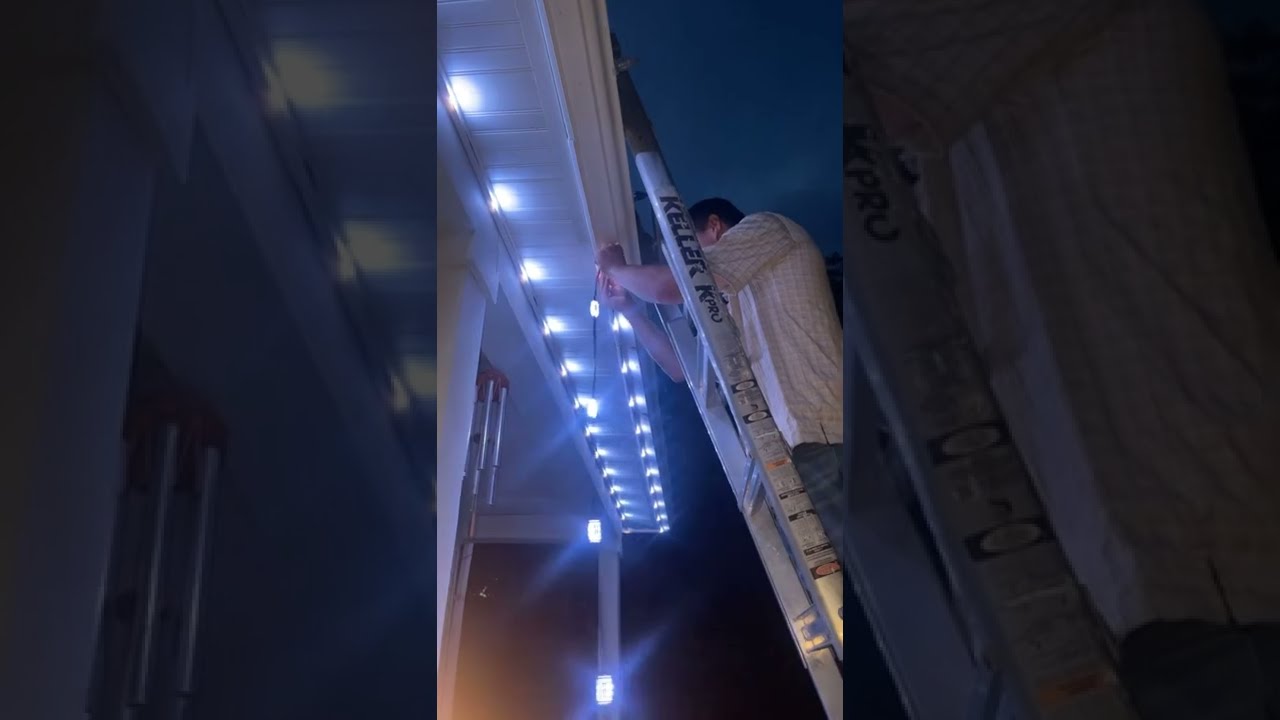
Still, not every LED system generates the same sort of heat. Some "warm white" presets lean peach, others drift greenish at reduced dim levels, and some shed their beauty when seen from a distance since the spacing or lensing produces a populated impact rather than a continual radiance. This is one location where seeing actual installed instances helps greater than reading specifications.
I typically urge homeowners to ask what the system looks like from three placements: directly under the eave, across the street, and from an angle as they draw into the driveway. A lights arrangement can execute beautifully from among those perspectives and let down from an additional. The objective is consistency in lived experience, not just an excellent photograph.
The role of dimming, timing, and seasonal restraint
One of the greatest benefits of Irreversible Vacation Lights is control. Paradoxically, that very same adaptability triggers many disappointing results. Just because a system can display dozens of colors and full illumination does not indicate it should.
Warm white lighting frequently looks finest when dimmed below what new buyers expect. A slightly lower setting provides the house a radiance instead of a glare. It additionally reads as extra expensive. High-end resorts and premium household projects have comprehended this for life. Comfortable light is usually not the brightest light available.
Timing additionally changes just how lighting is perceived. A front elevation that looks welcoming from sundown to 10:00 p.m. May feel excessive if it melts unchanged till dawn. Smart organizing allows a house to be aesthetically present during the energetic evening hours and quieter later in the evening. Some proprietors utilize one level for sundown to going to bed, then step down automatically. That is a subtle relocation, yet it makes the residential or commercial property really feel a lot more advanced and considerate.
Seasonal restraint matters as well. A home can definitely shift right into even more congratulatory scenes for holidays and unique occasions, however those moments feel more unique when they contrast with a classy daily standard. If the system is always running at spectacle setting, the novelty discolors quickly.
Matching the lighting to the architecture
A lights design that flatters a Tudor revival may not fit a sleek contemporary build. The architecture must inform you where to be strong and where to hold back.
Traditional homes frequently take advantage of heat, soft qualities, and solid interest to balance. The front door, patio columns, and major roofline are entitled to visual priority. Accent lighting can sustain dormers or peaks, but the therapy must stay measured.
Contemporary homes typically ask for precision. Cleaner lines, deeper overhangs, and darker outsides can bring a somewhat crisper presentation, though cozy white still has a tendency to feel more property and much less institutional. On these residential or commercial properties, even spacing and flawless positioning become specifically important because the architecture itself is so exacting.
Rustic and farmhouse designs reward heat maybe more than any type of various other classification. These homes can look captivating with classic cozy soft lights that echo the acquainted convenience of incandescent deck lights. But they can also look overdone swiftly if every barn-style line and secondary gable is illuminated at equivalent strength.
If a home has multiple masses, such as a text, a garage wing, and a deck enhancement, the lights needs to acknowledge that pecking order. The text typically should have importance. The garage can support, not control. This seems noticeable, yet plenty of installations accidentally make the garage the star since it offers the lengthiest nonstop roofline.
What house owners ought to ask prior to hiring an installer
The top quality void in this market is genuine. Products vary, but craftsmanship varies much more. A homeowner does not require to come to be a lighting engineer, though a few useful questions can disclose whether an installer is thinking past a fast sale.
- Where will the components sit, and will they show up from the street in daylight
- What warm white array does the system create, and can it be dimmed quickly
- How are cables, adapters, and power materials protected and accessed for solution
- Can the installer show local instances of homes using understated day-to-day settings
- What is covered if a section fails, fades, or acts inconsistently over time
The answers issue. So does the confidence behind them. Experienced installers usually discuss trade-offs without overselling excellence. They understand older soffits might need added treatment. They understand steep optimals or blended products can make complex balance. They recognize that app convenience does not compensate for bad physical layout.
A trustworthy professional additionally speaks about what not to light. That is frequently the clearest sign they appreciate the final appearance.
Budget, worth, and where the cash in fact goes
Permanent LED Lighting Installation is not a bargain-bin acquisition, and it needs to not be reviewed like temporary seasonal decoration. Costs depend on linear footage, roof covering complexity, accessibility, controller sophistication, product quality, and regional labor prices. A basic single-story run is one point. A multi-gable two-story façade with tough gain access to and multiple power areas is another.
What house owners are actually paying for comes under three classifications: the equipment, the installation ability, and the long-term benefit. The hardware obtains interest due to the fact that it is substantial. The installation ability is entitled to more of the credit rating. Tidy alignment, long lasting add-on, discreet electrical wiring, correct weatherproofing, and dependable control setup are what figure out whether the system still seems like a good choice years later.
There is likewise a value part that does not show up nicely on a spreadsheet. Seasonal setup and removal lug their own costs, whether measured in professional service charge, individual time, or physical risk. For many households, especially those with taller homes or limited movement, getting rid of ladders is not a luxury. It is the entire point.
The return is not simply sensible, though. A well-lit home adjustments how the residential property is experienced. It can make an entrance feel warmer, an exterior feel a lot more ended up, and evening aesthetic charm feel intentional as opposed to accidental.
Common blunders that mature a lighting project quickly
The initially mistake is picking trendy white due to the fact that it appears brighter during a demo. It often is brighter, a minimum of perceptually. It is additionally most likely to really feel outdated or commercial gradually on a residence.
The second is over-lighting. Numerous homes require much less strength than their owners anticipate. When the eye can see each point source plainly from the aesthetic, the layout typically needs either much more cover-up, more dimming, or both.
The third is ignoring daytime look. Irreversible systems live on the home 365 days a year. If the track, lens, or cord is visually intrusive in sunshine, the job compromises the exterior also when the lights are off.
The fourth is chasing fad scenes at the expenditure of a stylish default. If the application is full of impacts but the cozy white mode looks weak, rough, or unequal, the system will certainly not deliver the classic sophistication most owners actually want.
Finally, inadequate maintenance planning overtakes people. Every long-term system ultimately requires some service. Components age. Tornados happen. Firmware changes. If gain access to is impossible or documents is missing out on, small problems become costly ones.
A home need to still seem like itself at night
That is the criterion I return to frequently. Good illumination exposes the house. Excellent lights preserves its identity.
When home owners pick timeless cozy soft lights for their permanent system, they are frequently replying to that reaction, also if they do not expression it this way. They want comfort, yes. They desire the flexibility of Irreversible Holiday Lights, yes. Yet moreover, they want the house to stay sophisticated, acquainted, and welcoming after sunset.
The technology has actually gotten to a point where that is very possible. A Long-term LED Illumination Installment no longer needs to look theatrical or temporary. With cautious style, thoughtful placement, and self-displined control setups, it can become part of the style itself, almost undetectable by day and silently transformative by night.
The homes that age best with irreversible illumination are not constantly the biggest or the newest. They are the ones where somebody made a collection of sensible, restrained choices. Heat over glow. Percentage over excess. Workmanship over faster ways. Those options rarely get hold of attention in a showroom, yet they are exactly what produces the type of nighttime beauty that still feels best 5 years later.